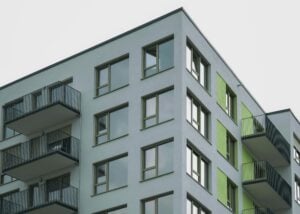
As an owners corporation, body corporate or strata committee, the safety and functionality of common property is your responsibility, and balconies sit near the top of that list. Balcony renovations in strata buildings are more complex than most committees expect: waterproofing compliance, structural assessment and the obligations of the Design and Building Practitioners Act 2020 all come into play before a tile is lifted.
BIM Sydney provides balcony renovation, replacement and repair services for strata and commercial buildings across Sydney. Here is what to understand before you commit to a scope.
The problem: balconies are where strata defects concentrate
Balconies are one of the most common sources of defect claims in Sydney strata buildings. Sometimes it is cracked tiles. More often it is a failing waterproofing membrane, and in the worst cases corrosion in the reinforced structure or drainage that never worked properly.
That concentration makes sense: balconies take significant UV, rain, thermal movement and daily foot traffic, so even a well-built, properly maintained balcony shows wear over time.
The risk for an owners corporation is not the visible damage. It is committing to a renovation scoped from the visible damage. A renovation that retiles over a failed membrane, or a replacement that ignores why the drainage failed, hands the same defect to the committee again in a few years, with water ingress, concrete spalling and structural deterioration compounding in between.
What are the compliance requirements for balcony renovations in Sydney?
Balcony renovation and remedial work in Sydney is governed by several codes and frameworks. Remediation that does not meet them can fail inspection and create liability for the owners corporation.
Australian Standards
External balcony waterproofing is covered by AS 4654.1 and AS 4654.2, which govern the materials, design and installation of waterproofing membranes for external above-ground applications: balconies, decks, rooftops and podiums. A point worth knowing, because it is often got wrong: AS 3740 is the standard for internal wet areas such as bathrooms and laundries. It does not apply to balconies. If a renovation specification cites AS 3740 for the balcony membrane, that is a signal to look closer at the rest of the specification.
National Construction Code
The NCC sets the requirements for protecting the building from moisture damage, along with structural, drainage and slip-resistance requirements that a balcony renovation must meet.
Design and Building Practitioners Act 2020
The DBPA applies to Class 2 buildings, which includes residential apartment buildings, and it captures remedial and rectification work. Regulated work requires registered practitioners, with compliance declarations provided before an occupation certificate application where one is required. For an owners corporation, this means the choice of contractor is also a compliance decision.
Strata Schemes Management Act 2015
The SSMA governs how owners corporations, committees and strata managers operate in NSW. Balcony structures are generally common property, so the Act places responsibility for their repair and maintenance with the owners corporation, subject to the scheme’s plan and by-laws.
The solution: investigate first, then renovate to the declared design
The most expensive mistake in strata balcony renovation is skipping the investigation. A contractor is engaged, they pull up some tiles, find a problem, and quote to fix what they can see, while the underlying cause goes unaddressed.
BIM Sydney carries out a thorough onsite investigation and documents the findings before any works begin. Onsite investigation typically includes visual and physical inspection, moisture testing to establish how far water has travelled, and targeted investigation openings where required, so the remediation design is built on evidence rather than assumption.
From those documented findings, the remediation design is prepared by a registered design practitioner, and BIM Sydney carries out the renovation to the declared design. Depending on what the design covers, that can include membrane replacement, concrete cancer treatment, drainage rectification, structural repairs, tile replacement and finish reinstatement, staged across the building where multiple balconies are involved.
Questions to ask before engaging a renovation contractor
- How do you investigate and document defects onsite, and how do you work with the registered design practitioner who prepares the remediation design?
- How is your work carried out to meet DBPA requirements on a Class 2 building?
- What warranty applies to the waterproofing works, and what exactly does it cover?
- How do you manage disruption to residents and tenants during the works?
- Can you provide references from comparable strata remediation projects in Sydney?
- How are scope variations handled if additional defects are found once the works open up?
A contractor who answers all six specifically understands your building. One who can only answer in generalities is quoting the visible damage. If you manage multiple schemes, our strata services page covers how we work with strata agents across a portfolio.
Frequently asked questions
Who is responsible for balcony maintenance in a strata building?
For common property such as balcony structures, responsibility sits with the owners corporation. Some fixtures and finishes may belong to individual lot owners, so clarify the split under your strata plan and by-laws before commencing works.
Does the DBPA apply to balcony renovation work?
Yes, for Class 2 buildings including apartment buildings. Structural balcony work and regulated designs must be carried out by or under registered practitioners, with the required compliance declarations provided.
How do I know if the balconies need waterproofing replacement?
Watch for water staining below balconies, cracked or lifting tiles, pooling water after rain, white salt deposits on concrete edges, and visible spalling. Any of these warrants a proper investigation before a renovation is committed to.
Can balcony remediation be staged across a strata building?
Yes. Staged programs in occupied buildings let the most critical balconies be made safe first, with remaining work scheduled to spread cost and minimise disruption to residents.
How long does a waterproofing membrane last on a Sydney balcony?
It depends on the system, the installation and the exposure. As a general guide, quality membrane systems installed to the correct standard carry manufacturer product warranties in the range of 10 to 15 years, with service life commonly longer. Ask for the specific product warranty as part of any renovation quote.
How long do strata balcony renovations take?
A single balcony membrane replacement can take a number of days. Building-wide remediation can run weeks or months, with staging planned around resident access.
Need a proper investigation before a balcony renovation?
BIM Sydney combines thorough onsite investigation with licensed remedial contracting (NSW Builder Licence 198846C, registered building practitioner under the DBPA, ACRA member, Master Builders Association member since 2015, ISO certified), building to the registered design practitioner’s declared design — we do not carry out work that cannot be justified with evidence. Call 02 9938 1740, email quotes@bimsydney.com.au, or contact us to arrange an onsite assessment.